
If you come to screenwriting from prose — novels, short stories — you'll need to unlearn almost everything. The skills that make you a good novelist can actively sabotage your screenwriting. I learned this the hard way, travelling in the opposite direction.
The fundamental difference
In prose, you control everything. The reader's experience happens entirely through your words. You can go inside characters' heads. You can describe emotions directly. You can tell us what things mean.
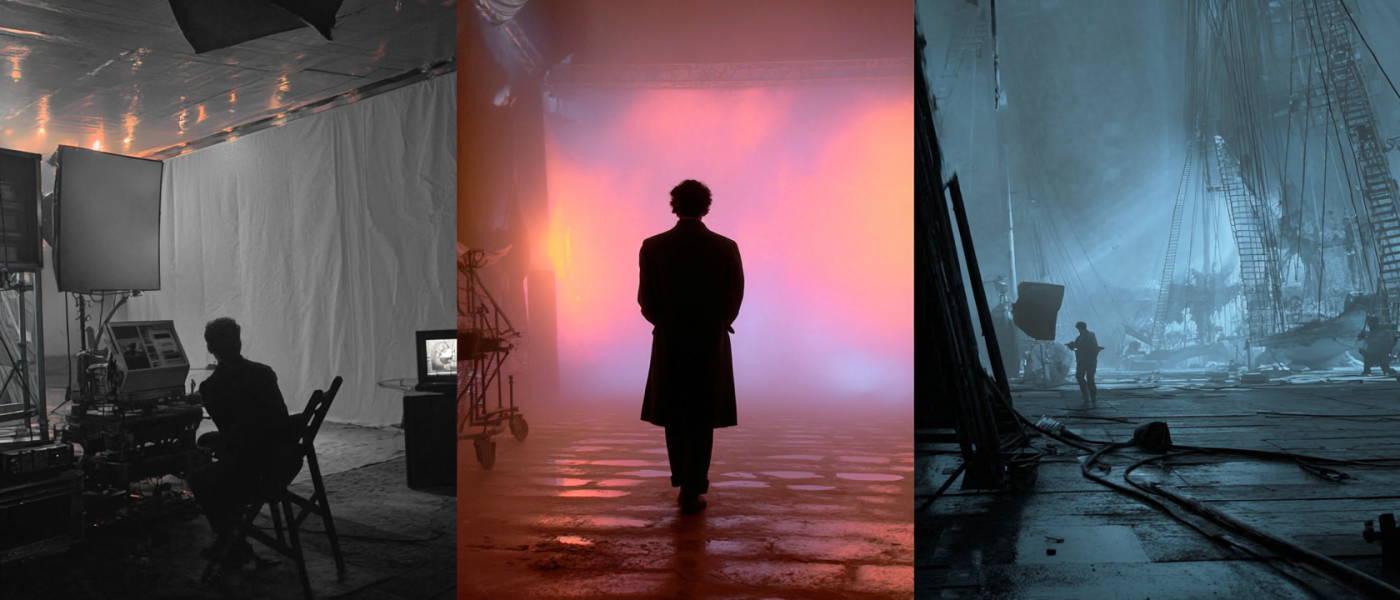
In screenwriting, you control almost nothing. Your words are instructions for other people — director, actors, cinematographer, editor — to create the actual experience. You're writing a blueprint, not a building.
You can't be inside the head
This is the hardest adjustment for prose writers.
In a novel: "Sarah felt the old familiar dread settling in her stomach. She knew what was coming. She'd seen that look in his eyes before, the night everything changed."
You can't write that in a screenplay. We can't see Sarah's dread. We can't know what she knows. We can only see what the camera sees.
In a screenplay: "Sarah freezes. Her hand tightens on the doorframe."
That's it. That's all you get. External, observable behaviour. Everything internal must be expressed through action, dialogue, or visual implication.
Show, don't tell
"Show, don't tell" is always good advice in prose. In screenwriting, it's not advice — it's a physical law. You literally cannot tell. There's no narrator. There's no internal monologue (unless you're making noir). There's only what we see and hear.
This forces a different kind of storytelling. Every emotion, every piece of information, every character beat must be dramatised. If it can't be filmed, it can't be in your script.
The reader is different
A novel reader wants to be immersed. They'll spend hours with your prose, savouring sentences, rereading passages.
A screenplay reader — and there will be many before anyone films anything — wants to skim efficiently. They're reading dozens of scripts. They want to see if your story works, fast.
This means: short paragraphs. White space. Minimal description. Punchy action lines. Dialogue that moves.
Dense prose is death in a screenplay. It signals amateur.
The purpose is different
A novel is the final product. What you write is what readers experience.
A screenplay is a stage in a process. What you write will be interpreted, changed, filtered through dozens of other creative decisions. Scenes will be cut. Dialogue will be rewritten on set. Actors will act a line better than they can say it. The director will find meaning you didn't intend. Editors will find juxtapositions that tell the story far better than your honed-to-perfection dialogue.
This requires a certain humility. Your screenplay is an invitation, not a final word.
Why bother?
Because the constraints are generative. Because learning to tell stories purely through external action makes you better at everything else. Because film reaches audiences that prose never will.
And because it's a different kind of puzzle — one where you have to imply everything, control nothing, and trust other people to bring your words to life.