
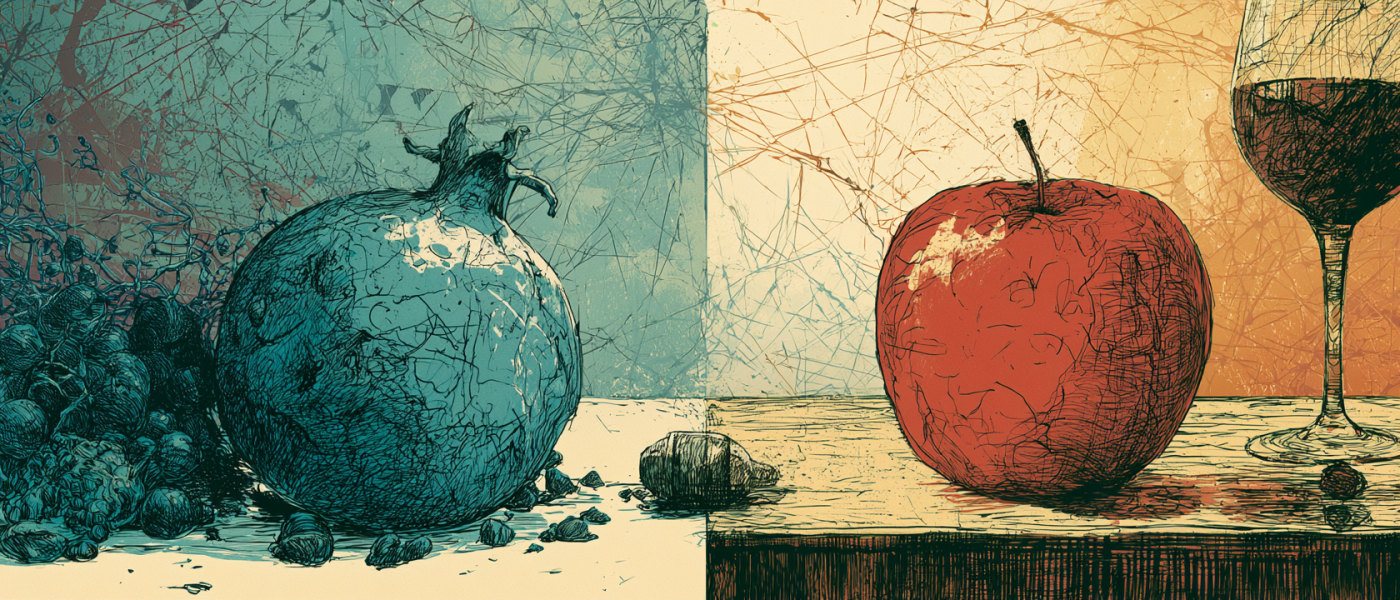
There's a phase in every writer's development that almost nobody warns you about. Ira Glass described it better than anyone:
“All of us who do creative work, we get into it because we have good taste. But there is this gap. For the first couple of years you make stuff, it's just not that good... your taste is still killer. And your taste is why your work disappoints you.”
This is the gap. And it's where most writers quit.
What the gap feels like
You know what good writing looks like. You've read enough brilliant books to have an instinct for what works. You can spot weak dialogue, clumsy exposition, lifeless description — in other people's work and, alas, in your own.
But you can't fix it yet. You can see the problem. You can't solve it. Your ability hasn't caught up with your taste.
This feels like proof that you're not a real writer. It feels like evidence that you should stop. Everyone else seems to produce effortless, polished work (they don't — you're seeing their finished drafts and comparing them to your first ones) and you're producing . . . this.
Why the gap is actually good news
The gap means your taste is ahead of your ability. That's where you want it.
Writers with no gap — whose taste matches their current skill — don't improve. They're satisfied with work that isn't pushing them. They've stopped growing.
The discomfort of the gap is the engine of improvement. It's what makes you rewrite. It's what makes you study craft. It's what makes you look at a sentence and think “no, that's not right” and keep working until it is.
The gap hurts. But it's proof that you're developing as a writer, not evidence that you should stop.
How to survive it
Keep writing through it.
This is the only way to close the gap. Volume. Practice. Finishing things, even when they disappoint you.
Study the craft deliberately.
Don't just read — read as a writer. When something works, figure out why. When something fails, diagnose it. This accelerates the closing of the gap.
Finish things.
A completed story that disappoints you teaches more than an abandoned masterpiece. The ending is where the most learning happens, because it's where all your earlier decisions come home.
Compare yourself to your past work, not to published authors.
If you're better than you were six months ago, you're on track. The gap is closing, even if it doesn't feel like it.
The other side
The gap doesn't close all at once. It narrows gradually, unevenly. Some days you'll write something and think: yes, that's actually good. Other days the old despair returns.
But eventually — if you keep going — your ability catches up. Not perfectly. Not for every sentence. But enough that the work starts to feel like yours. The thing on the page starts to resemble the thing in your head.
That's not the end, of course. Your taste keeps evolving too. The gap never fully closes — it just becomes manageable. Productive, even.
The writers who make it aren't the ones who never experienced the gap. They're the ones who kept writing through it.
The Silly Shirt Manifesto is about writing through the hard parts — the gap included.