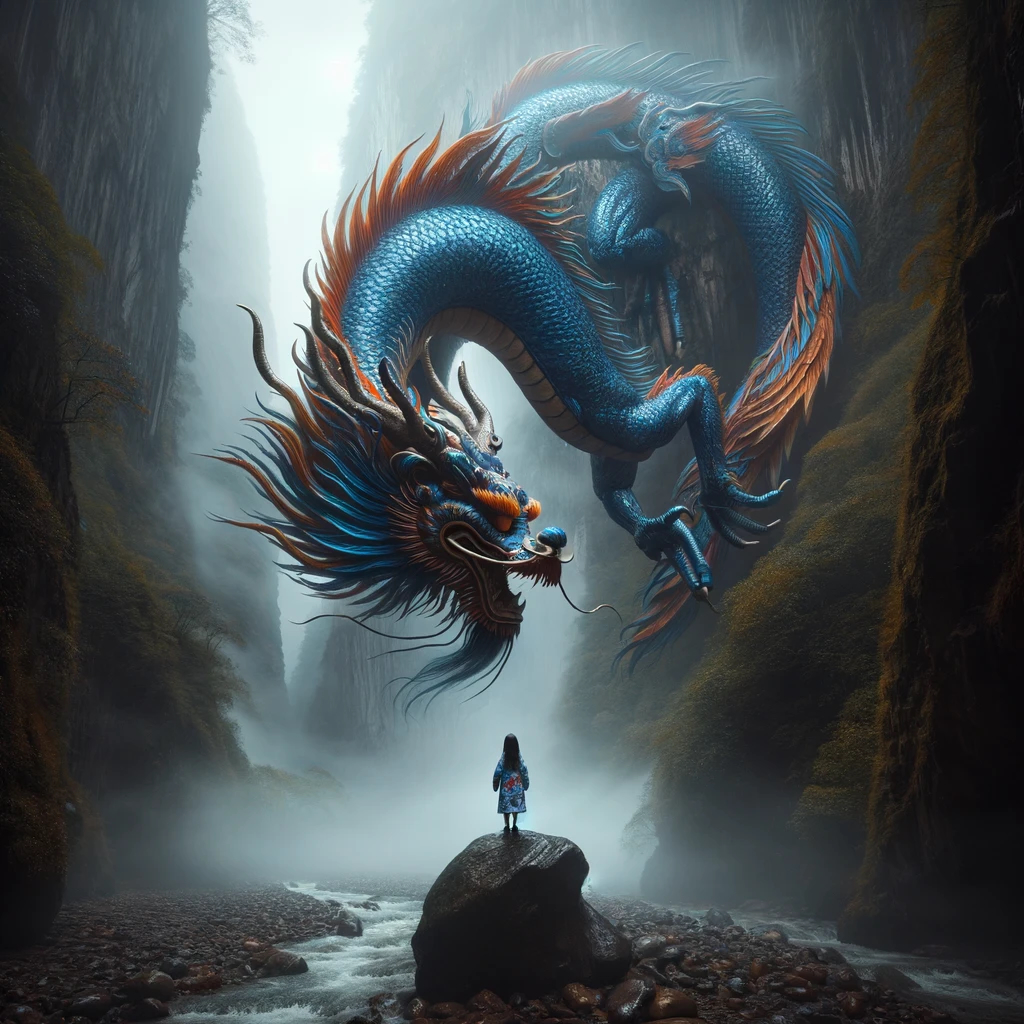
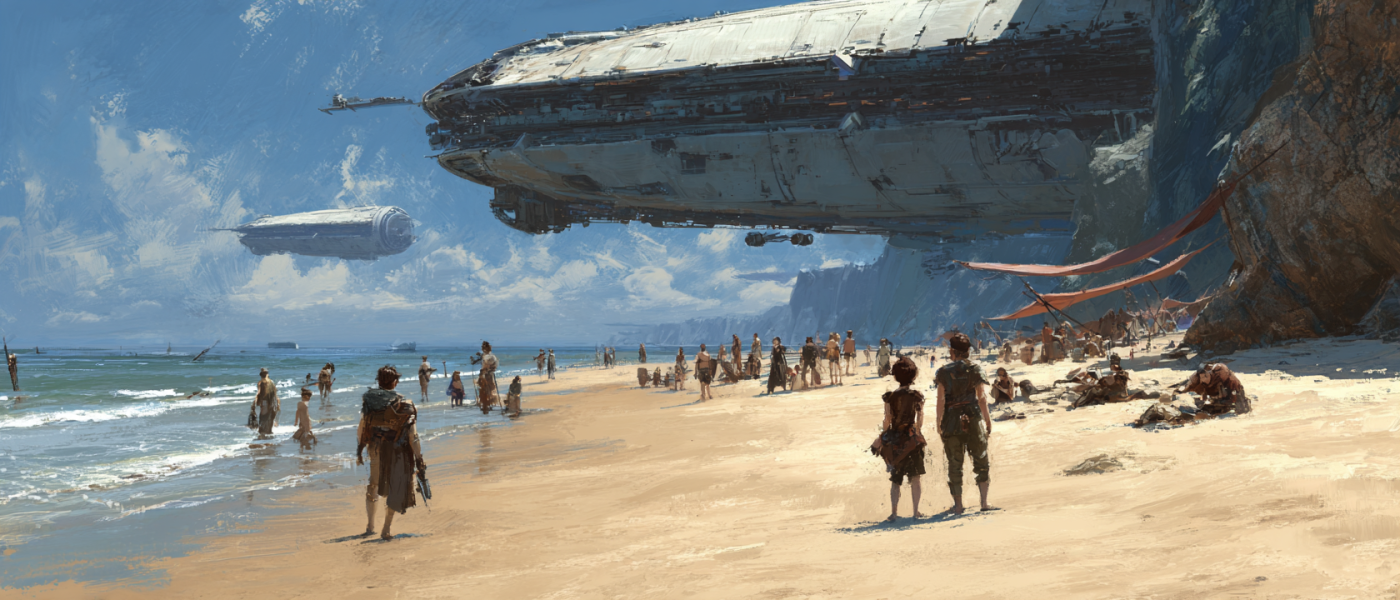
There's a particular feeling that drew me to SFF as a child and keeps me here as an adult. That sense of stepping through a door into somewhere impossible. The shiver when a new world clicks into focus. The delicious vertigo of realising the rules here are different.
As a starry-eyed 5-year-old, I sat and watched some new film called Star Wars in the old cinema in Hythe. I still remember it vividly almost 50 years later. I felt it then, and I still feel it now.
What is that feeling, exactly? And why do some of us chase it compulsively while others never understand the appeal?
The literature of "what if"
All fiction asks "what if" to some degree. What if a woman left her husband in 19th-century Russia? What if a white whale obsessed a sea captain? But SFF asks "what if" in a specific way: what if the world itself were different?
What if magic were real? What if we could travel faster than light? What if death could be reversed, or consciousness uploaded, or history had taken another path?
This isn't escapism — or rather, it's not just escapism. It's a way of thinking. SFF readers develop a particular cognitive flexibility: the ability to hold unfamiliar premises and trace their implications. To build consistent models of impossible things.
This is, not coincidentally, exactly what scientists and philosophers do.
Estrangement makes us see
When you move the furniture, you notice the room.
SFF creates estrangement — a distance from ordinary life that paradoxically helps us see ordinary life more clearly. The alien society comments on our society. The future world illuminates our present. The magical power becomes a metaphor for real forces we struggle to name.
This is why SFF can address big themes — mortality, identity, power, freedom — without becoming preachy. The fantastical distance creates space for reflection. We're not being lectured; we're exploring.
The appeal of coherent worlds
There's a particular pleasure in understanding how a world works. Not just accepting that magic exists, but knowing how it operates. Not just visiting a planet, but grasping its ecology, politics, history.
SFF rewards attention in a way other genres often don't. Easter eggs for careful readers. Systems that reward analysis. The deep lore that you can spend hours exploring.
Some people find this alienating. Why care about the history of a place that doesn't exist? But for SFF readers, the imaginary depth is part of the point. We're not just reading a story; we're temporarily inhabiting another reality.
Found families and unlikely heroes
SFF is disproportionately full of orphans, outcasts, and misfits. People who don't belong where they started. People who find their true families among companions rather than blood relations.
This resonates. Many of us came to the genre feeling like we didn't quite fit. The stories told us that was okay — that the kid who didn't belong might turn out to be exactly who was needed. That found families could be stronger than inherited ones. That the strange and the different had their place.
The genre that grew up
When I was young, fantasy meant Tolkien imitators and sci-fi meant spaceships and laser blasters. The genre has transformed beyond recognition.
Today's SFF explores artificial intelligence, surveillance, genetic engineering, virtual reality, and questions of identity and consciousness that previous generations couldn't have imagined. It has subgenres for every taste — from the cosiest comfort reads to the darkest examinations of human nature.
The literature of imagination has never been more varied or more inventive.
Why does this matter?
Maybe it doesn't. Maybe we just like dragons and spaceships and don't need to analyse it.
But I think our fiction choices reveal something about how we engage with the world. SFF readers are, as a rule, comfortable with uncertainty. We enjoy not understanding at first, then gradually figuring things out. We're willing to accept premises and follow them to unexpected conclusions.
In a world that's changing faster than most of us can process, these seem like useful habits of mind.